

{{ jubSel.name }}
{{ jubSel.dates }}{{ jubSel.intro }}
{{ jubSel.students }} Find them on the map →{{ p }}
{{ p }}
{{ pm.text }}
— {{ pm.by }}Philadelphia was the civic laboratory of Black America — the city where Black people invented how to protest, how to claim rights, how to build institutions that could sustain a community under conditions of profound oppression. The people who did that are buried at Eden.
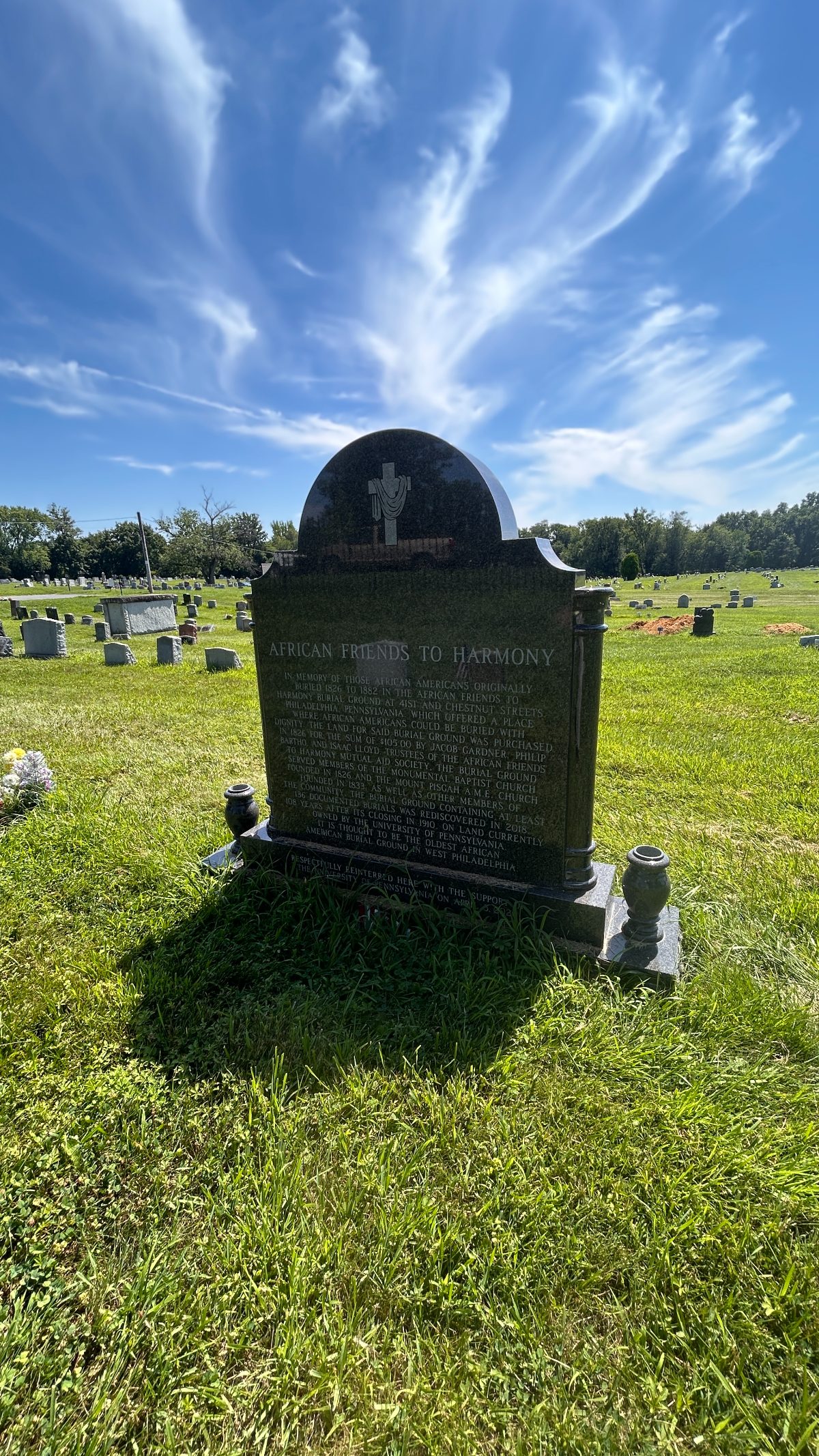
When Lebanon and Olive Cemeteries — home to Philadelphia’s Black citizens — were forced to close, Eden absorbed them all. It now holds the abolitionists who operated the Underground Railroad in plain sight, the ministers who built the first Black churches, the poets who told America it could not be free while it held people in chains, the architects who designed the buildings of elite American institutions, and the musicians who carried the sorrow and joy of a people to the world’s great stages.
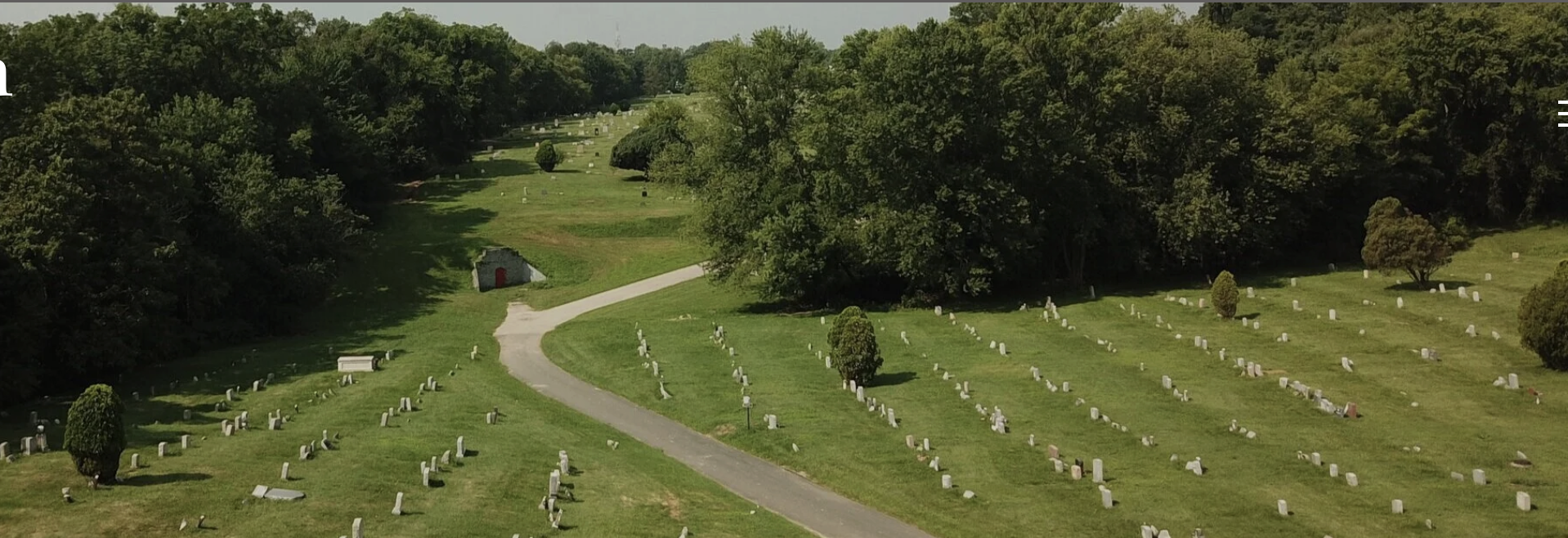
When you walk Eden’s 53 acres, you are not visiting a cemetery. You are time traveling through the foundation of Black American identity.
Walk the grounds on a self-guided tour, join a docent-led walk, or use our interactive map to find the resting places of the people who built Black America.
Burial options, headstones and monuments, pre‑need arrangements, and family research requests are all handled by the cemetery office. Call or email — a person answers.
Eden is how we transport the past to our future. Join the Friends of Eden and help preserve 124 years of refusing to let Black history be buried twice.
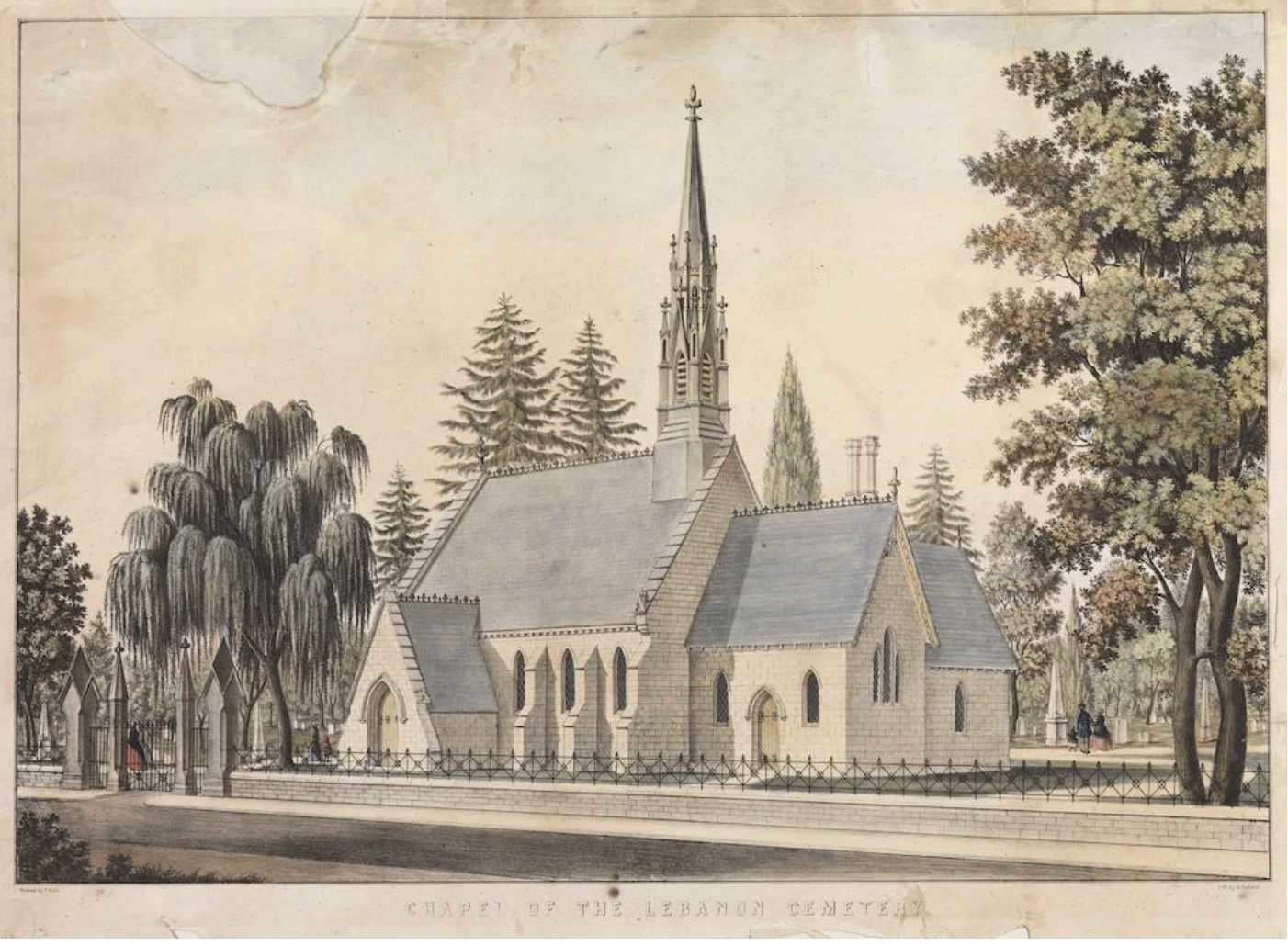
The creation of the Eden Cemetery Company was a collaborative act of African American agency: a sanctuary where Black Philadelphians could be buried with dignity and respect. Eden holds Lebanon Cemetery, founded by Jacob C. White Sr. and managed by his son, Jacob C. White Jr.. Eden holds Olive Cemetery, founded by Rev. Stephen Smith. Eden also holds remains from the African Episcopal Church of St. Thomas, First African Baptist, Monumental Baptist, the Home for the Colored Aged and Infirm and the Association for the Care of Colored Orphans. And many more
The great Black burial grounds of Philadelphia — home to some of the most important Black Americans in history — were forced to close. Other cemeteries were not forced to move.
But Eden took them all in. Their residents were reinterred on Eden’s grounds, where the cemetery’s sections became declarations of pride — with sections named for important historical figures like David Bustill Bowser, Harriet Tubman, and Octavius Catto.
What looks like a cemetery is actually an act of resistance — 124 years of refusing to let Black history be buried twice.
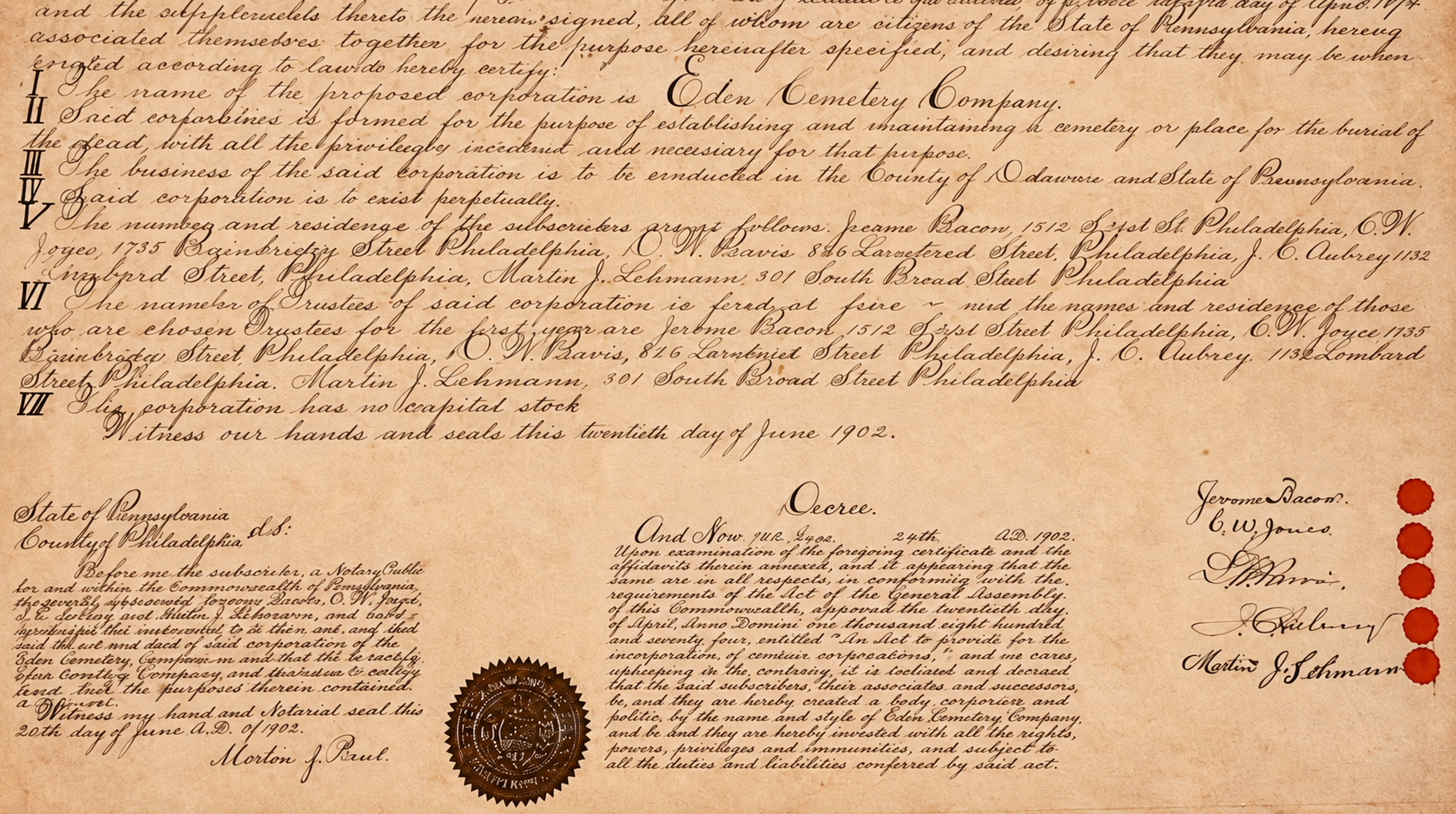
Eden was founded and incorporated by a company of Philadelphians who put their names, their money, and their standing behind a burial ground the city had made impossible. John C. Asbury served as its first president.
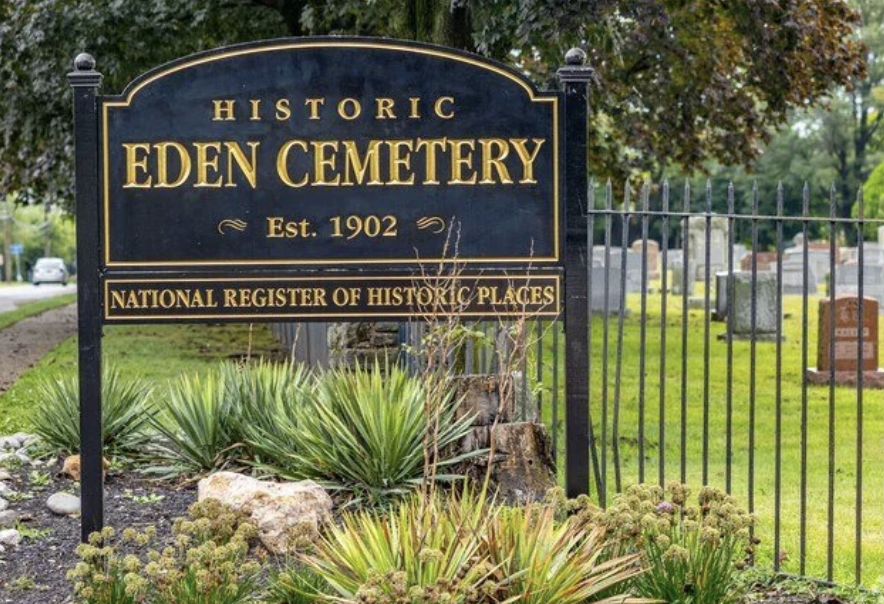
Eden opened on fifty‑three acres of the old Bartram farm in suburban Delaware County — land purchased because Philadelphia had made new African American cemeteries within city limits effectively impossible. The charter was granted on July 26, 1902. Three days before that, Collingdale’s town council had quietly passed an ordinance prohibiting any cemetery inside the borough.
On August 12, a funeral procession arrived and was met at the entrance by a watchman posted by borough officials. The mourners waited. The hearse waited. Authorities delayed the burial for a day and a half while lawyers argued. A compromise was reached on August 14, and Eden held its first burial — under protest.
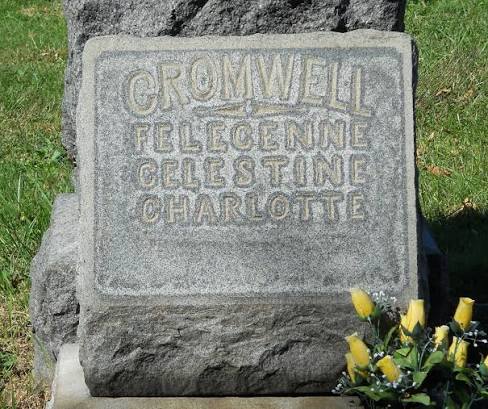
Celestine Moseley Cromwell died on August 8, 1902, aged 49. Her husband, Willis H. Cromwell, sat on the twenty‑nine‑member advisory board of the Eden Cemetery Company, which had received its charter that June. The board decided that Mrs. Cromwell would be Eden’s first burial.
CROMWELL — On August 8, 1902, Celestine Moseley, wife of Willis H. Cromwell, aged 49 years. Funeral from her late residence, 819 South Seventeenth street, on Tuesday morning, at 10 o’clock. Interment at Eden Cemetery.
Her body lay in the stable shed of Mt. Zion Cemetery for thirty‑six hours while attorneys fought over whether she could be buried at all. When the compromise came, the lawyers themselves served as pallbearers and filled in the grave. Litigation continued through December 1902. Eden’s second burial did not take place until December 12.
Transcribed from the Delaware County Daily Times, Chester, Pennsylvania. These headlines are reproduced as they were published. The language is the language of 1902, and it is part of the record Eden exists to preserve.
{{ para }}
The lives at Eden span from 1721 to the present. Walk among them.
Visitors come to Eden every year searching for the final resting places of the people who built Black America — abolitionists, ministers, physicians, poets, architects, and musicians. Ninety-three thousand stories are waiting to be heard. These are a few of them.
See Them On the Map →
1897 – 1993
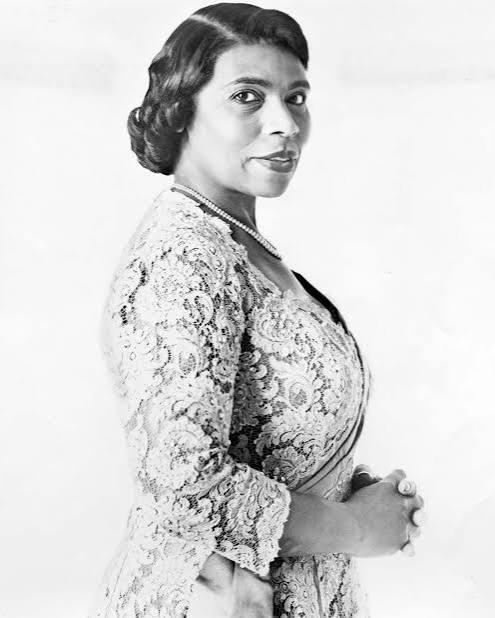
One of the greatest voices of the twentieth century. When the Daughters of the American Revolution barred her from Constitution Hall in 1939, she sang instead from the steps of the Lincoln Memorial before 75,000 people — a moment that became a landmark of the civil rights movement. In 1955 she became the first African American to perform with the Metropolitan Opera.
She carried the sorrow and joy of a people to the world’s great stages. She rests at Eden.
Find her on the map →
1839 – 1871
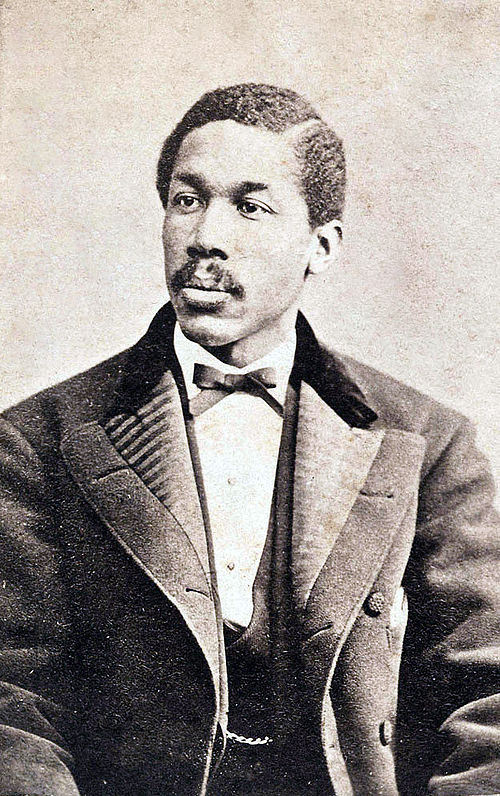
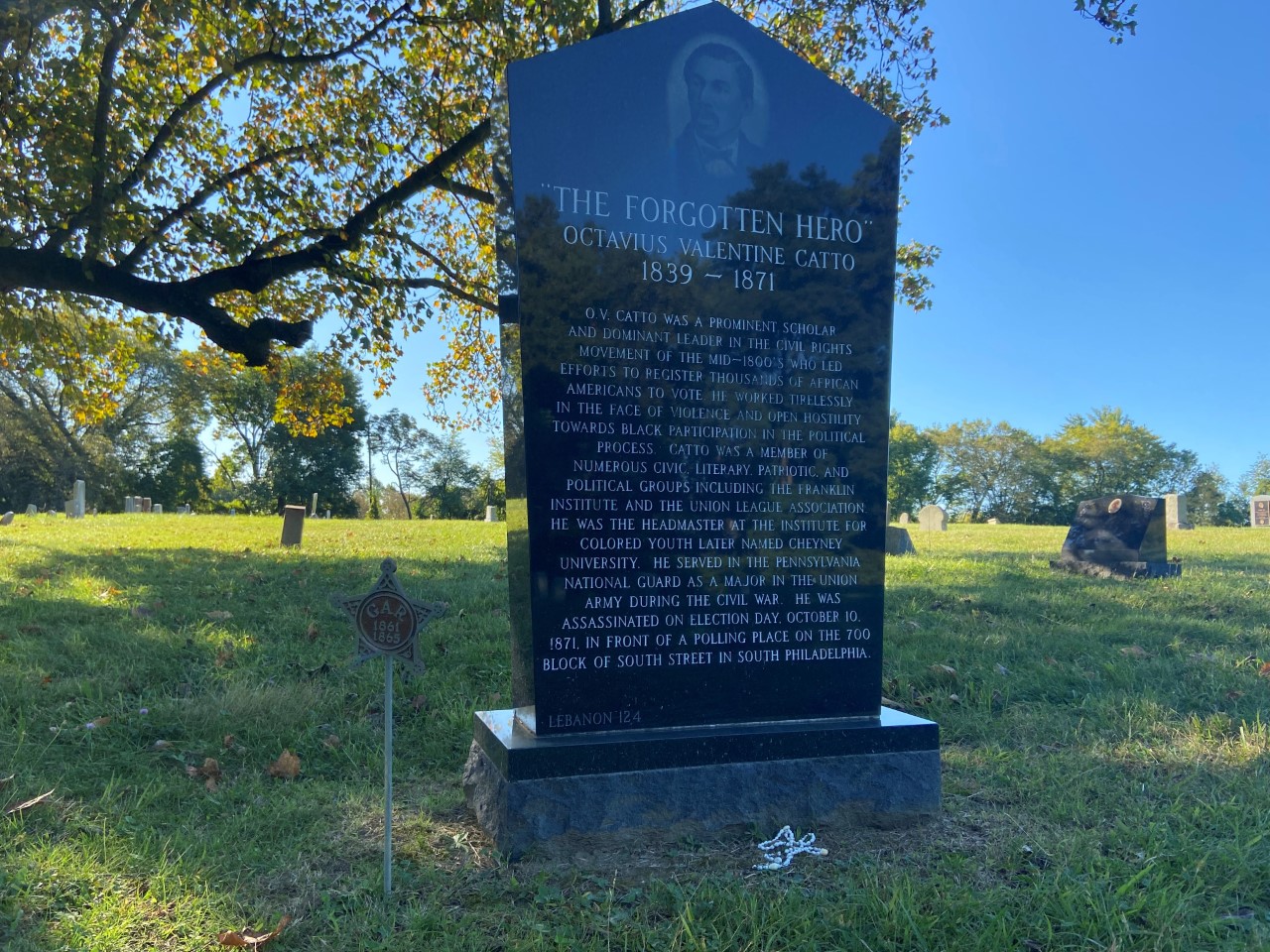
Scholar, educator, and the dominant civil rights leader of his generation. Catto led efforts to register thousands of African Americans to vote, desegregated Philadelphia’s streetcars, and served as a major in the Pennsylvania National Guard. He was assassinated on Election Day, October 10, 1871, in front of a polling place on South Street — a martyr for the ballot, a century before Selma.
Reinterred from Lebanon Cemetery — Eden held him. Eden holds him still.
Find him on the map →
Every person and family on Eden’s guided tour route, with their section and lot. Filter by the work they did, or search by name.
“What looks like a cemetery is actually an act of resistance — 124 years of refusing to let Black history be buried twice.”
Walk the GroundsStudents at Jubilee School in Philadelphia — from second grade through eighth, and alumni who came back to help — researched the people who rest at Eden and wrote to them. Introductions, stories, letters, and poems, in the students’ own words. Choose a name to read.
A one-page treasure map of Eden. Follow the numbers, find all twelve markers, and check them off as you go. Print it at home or at school and bring it on your visit.
Open & print the map → Prints on one landscape sheet · save as PDF from the print dialog{{ jubSel.intro }}
{{ jubSel.students }} Find them on the map →{{ p }}
{{ p }}
{{ pm.text }}
— {{ pm.by }}Use the interactive map to navigate Eden’s 53 acres, locate historic sections — including the reinterred grounds of Lebanon and Olive Cemeteries — and find the resting places of notable residents.
Self-guided walks →Walk the grounds at your own pace. Two phone-friendly walks lead you through Eden’s historic sections — including the reinterred grounds of Lebanon and Olive Cemeteries — and the people who rest there.
Open the interactive map →Open a walk on your phone before you set out, or print a route sheet to carry along. Take care — the ground can be uneven.
Eden is divided into lots. People are buried in lots. Use Find a Grave to search for the person and find their lot number. Then use the interactive lot locator below. Please note that locations are approximate within a few feet.
We need Eden not just because of what happened in the past — but because of what is happening right now. The Friends of Eden fund preservation, education, and access, so the stories this ground holds can teach future generations.
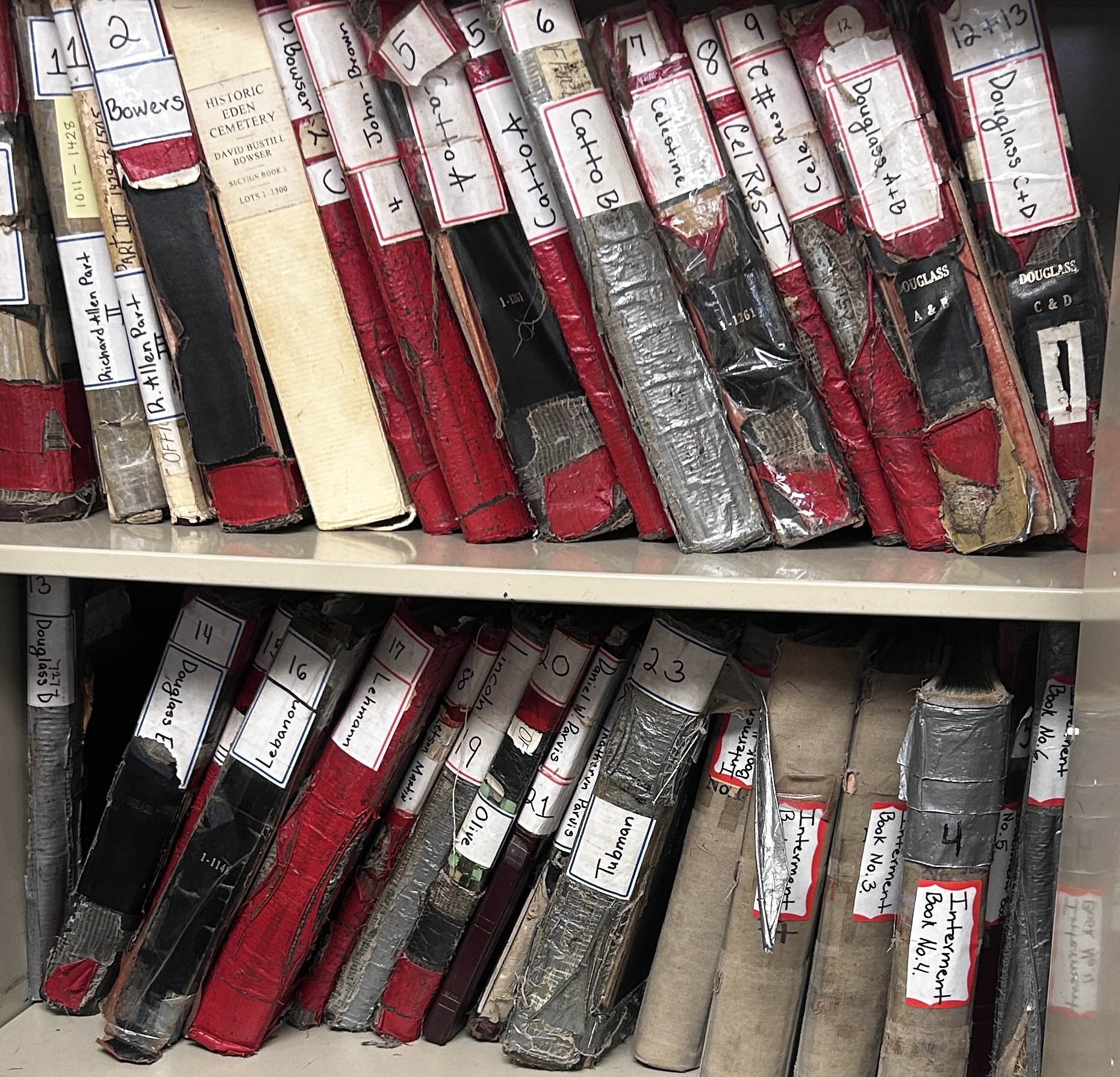
Eden’s records hold the burials of this 53‑acre site since 1902 — and the records of the dislocated 18th and 19th century African American burial grounds Eden received. Decades of use and imperfect storage have taken their toll.
Protecting them means safe housing and secure storage. Preserving them means stabilization and conservation, then digitization, transcription, and entry into a records management system — so they can be searched, studied, and used without further damage.
Protecting these records keeps the lived stories of people and communities from vanishing.
“Cemeteries… are more than places of burial. They are an archive of human experience — and for many Black Americans, the way genealogy becomes possible at all.”
Help Eden survive — so the stories it holds can teach us ways to improve our now.
The people and principles that care for Eden — its grounds, its records, and the families it serves.
Historic Eden Cemetery exists to honor, preserve, and steward the burial ground, records, and legacy of African Americans laid to rest at Eden, while ensuring dignity in burial, integrity in historical preservation, and service to present and future generations.
Historic Eden Cemetery will be a protected and respected historic site where African American history is preserved, burial records are secure and accessible, families are served with care and respect, and the legacy of those interred is safeguarded for generations to come.
Governance and oversight for the grounds, records, and long-term future of Eden — a trust that began with the five founders who signed the company’s charter in June 1902.
Eden commemorates those entrusted to our service with care and dignity, and comforts the bereaved in a tranquil, natural landscape. We offer burial and cremation options, memorials and headstones, and pre‑need arrangements.
The lives of those who have gone before us are preserved in the memories of the living.
Anyone who has loved a spouse, raised a family, taught children kindness and respect, or helped a friend through sickness and adversity deserves a memorial — a marker at the graveside that represents a life and what it meant to others.
Eden provides memorials and headstones for use at any cemetery, not only our own.
Eden is a place where you can visit family and friends with pride, and a site of African American historic and cultural significance. Contact us about burial options, headstones and memorials, pre‑need services, and research requests.
Fill this in and it will open an email to the cemetery office with your details ready to send.